
Just a few hours from Tokyo, off Mikomoto Island on Japan’s Izu Peninsula, one of the world’s most spectacular underwater scenes unfolds.
I once traveled to La Paz in Mexico and Yonaguni Island to seek schools of hammerhead sharks. Little did I know that the same unforgettable experience was waiting right here, off the Izu Peninsula.
A Divine School of Hammerhead Sharks.
A Spectacle Reserved for Advanced Divers
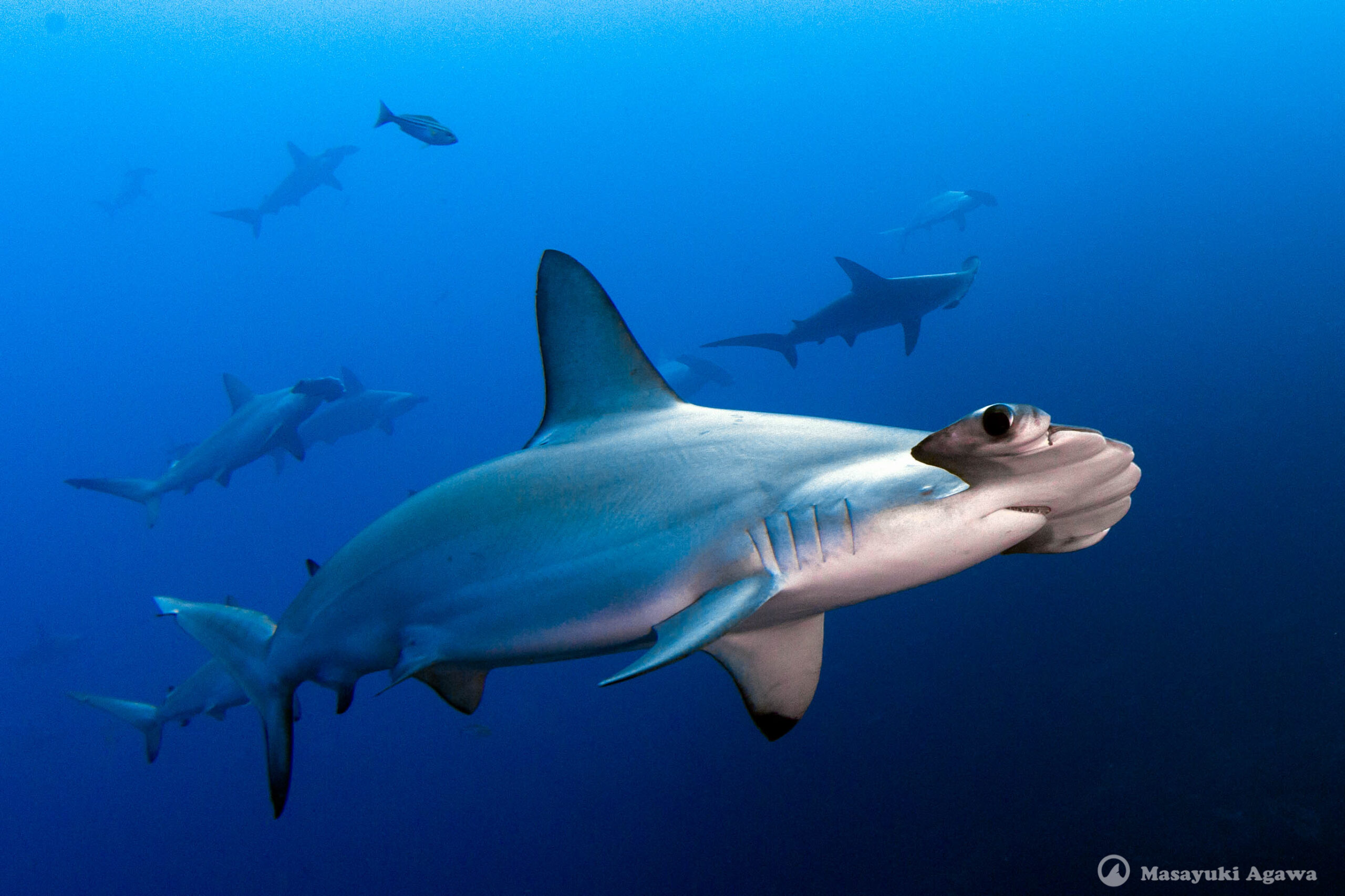
“Can you really see hammerhead sharks off the Izu Peninsula?” I have to admit, I was more than a little skeptical.
Hammerhead sharks are among the most coveted sightings in the diving world. Instantly recognizable by their distinctive hammer-shaped heads, they’re a dream encounter for divers everywhere. Unlike tiger sharks or great whites, however, hammerheads are naturally shy. As long as you observe them respectfully from a distance, they pose little danger. Their streamlined bodies and powerful muscles make them seem more beautiful than intimidating.
During my years as an editor for a diving magazine, I traveled as far as La Paz in Mexico and Yonaguni Island, a remote island in Okinawa, in search of schools of hammerhead sharks. That’s why I found it hard to believe that such an extraordinary experience could be found right here, off the Izu Peninsula—a place many divers in the Tokyo area consider their home waters.
Board the Dive Cruiser
Off to Mikomoto Island!
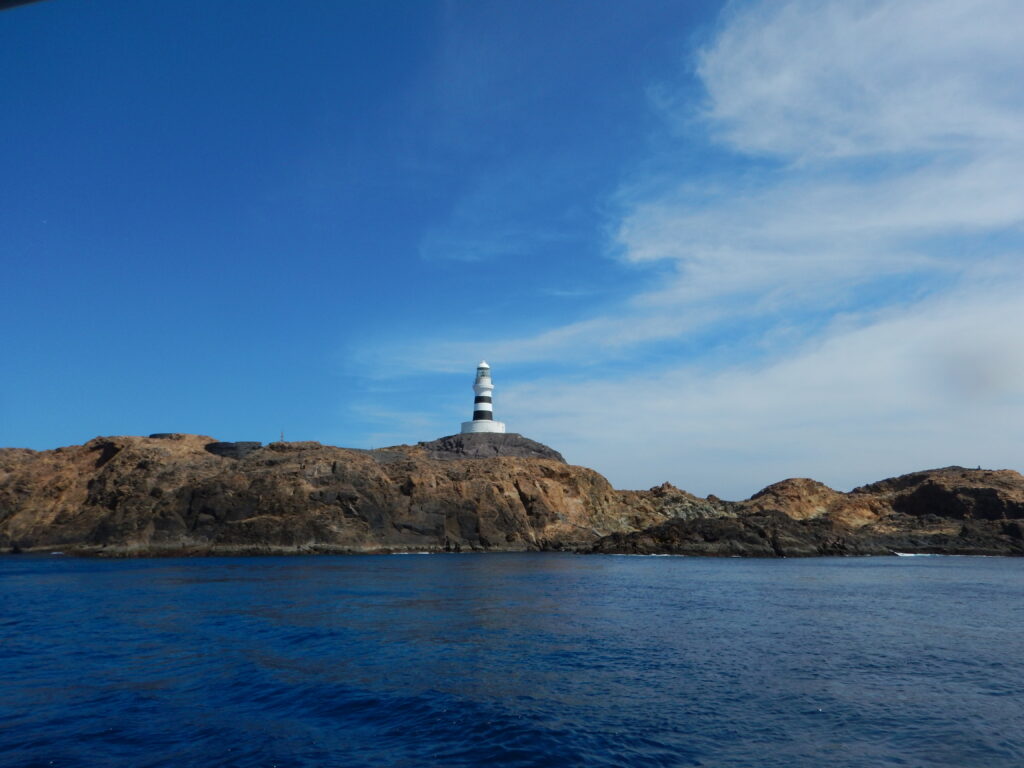
Mikomoto Island lies about 8 kilometers off Yumigahama Beach in southern Izu. Rising above the island is the Mikomoto Lighthouse, one of only five lighthouses in Japan included among the World’s 100 Historic Lighthouses.
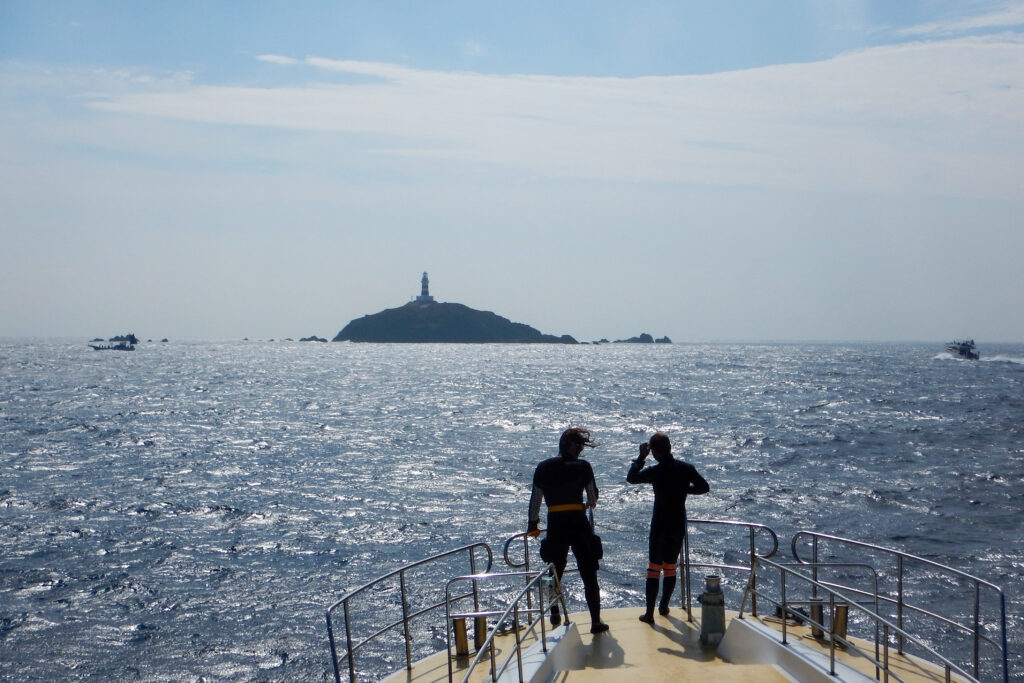
The island is just a 15-minute dive boat ride from the harbor. As the lighthouse gradually draws closer, I can feel my excitement for the dive building.
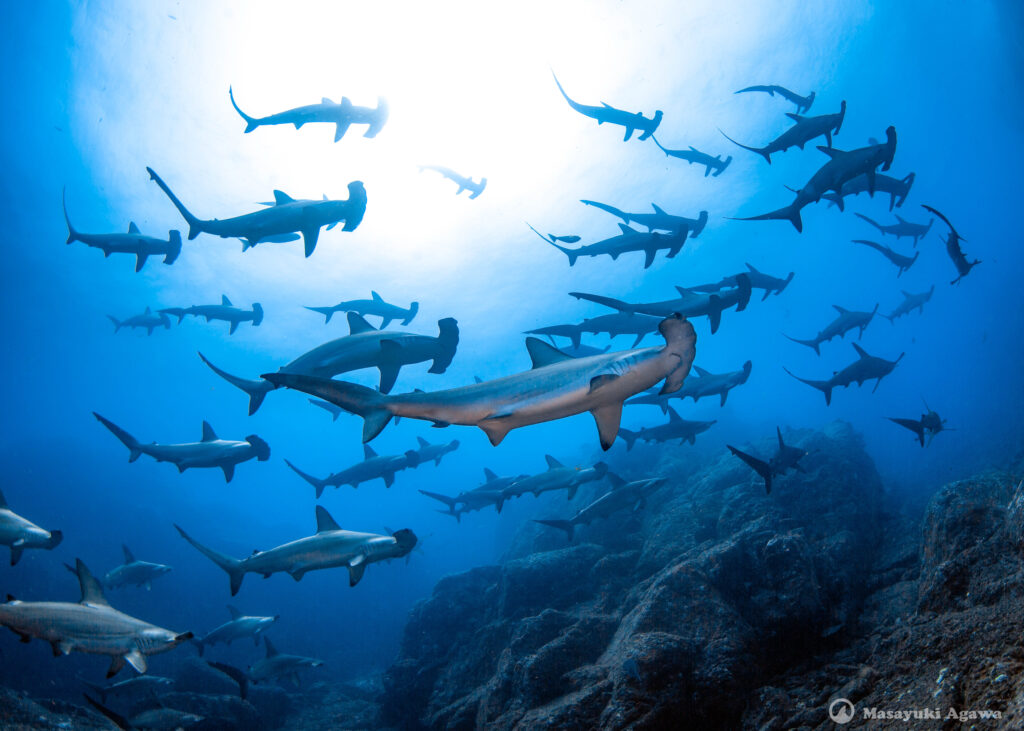
Photo courtesy of Mikomoto Hammers
It happened at a dive site known as Kame-ne. Following my guide, I was signaled to stay where I was. Bracing myself against the powerful current, I looked ahead—and there they were. A school of hammerhead sharks, gracefully weaving through the rushing water.
The sight was so mesmerizing that even the sound of my own regulator seemed to disappear. The world around me faded away, leaving only the hammerheads and me. Even now, that moment remains etched in my memory with remarkable clarity.
English-Friendly—But There Are Requirements to Dive
Today, Mikomoto Island has earned worldwide recognition among divers. When I mention abroad that I’m from Japan, fellow divers frequently ask, “Have you ever dived at Mikomoto?” Some dive operators at Mikomoto can now accommodate guests in English, although divers must be able to communicate directly without relying on a translator or translation device.
That said, this is not a dive for beginners. Under the regulations of the Mikomoto Diving Association, all divers must have logged at least 50 dives, including training dives. Divers aged 60 and over, as well as those receiving medical treatment, must present a physician’s certificate. Divers aged 15 and under or 70 and over are not permitted to participate, even with medical clearance. If you have not dived in over a year, you will not be allowed to participate. In addition, all participants must be able to communicate with the staff in either English or Japanese without the aid of a translator or translation device.
Specific requirements may vary depending on the dive operator. Please contact us for further details.
Diving at Mikomoto is demanding and reserved for experienced divers. These requirements are essential—not only for your safety, but also for getting the most out of the experience.
Discover Southern Izu’s Spectacular Hidden Beaches!
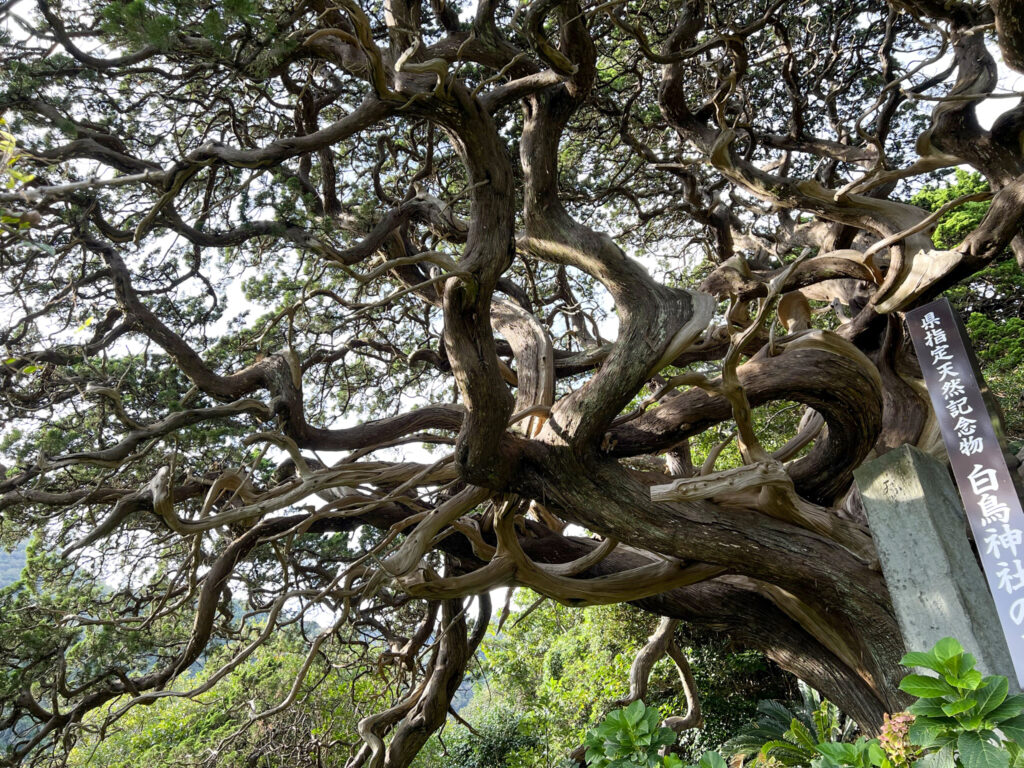
If you’re using Yumigahama as your base for diving at Mikomoto, don’t miss the chance to enjoy the area’s hot springs as well. Many family-run inns have their own natural hot spring baths, and nearby hot spring towns such as Shimogamo and Koura are also well worth a visit.
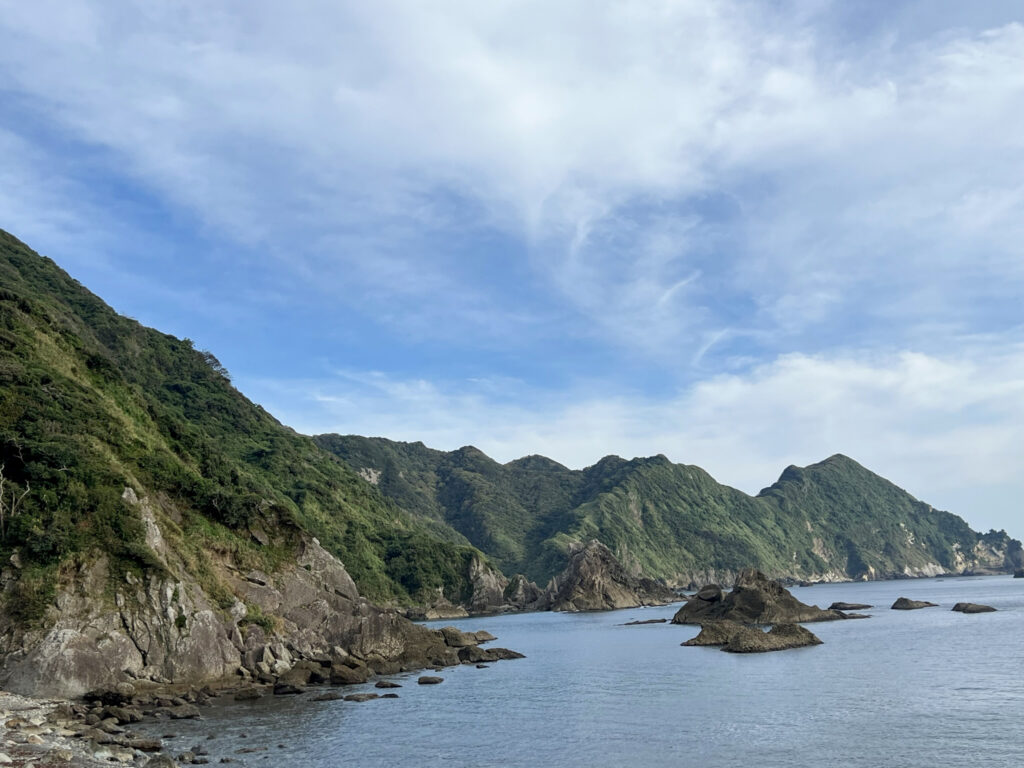
Southern Izu is also home to some of Japan’s most beautiful hidden beaches. Among the best known are Hirizo Beach, with its dramatic Mediterranean-like coastline, and Yoshida Beach, whose fairy-tale beauty is hard to forget. Beyond these, countless spectacular beaches await throughout southern Izu.

Suggested Itinerary for a Hammerhead Dive at Mikomoto Island
Day 1
Travel to Izu in Comfort
Take the Saphir Odoriko train from Tokyo Station to Shimoda.
From Shimoda Station, travel by car to your accommodation.
After check-in, enjoy the rest of the day at your leisure.
Day 2
Meet the Hammerheads
Enjoy a two-tank boat dive at Mikomoto Island in search of its iconic hammerhead sharks.
Day 3
More Hammerheads, Please!
Enjoy another day of two-tank boat dive to meet the lovely sharks one last time.
Day 4
Discover Southern Izu’s Hidden Beaches
Spend the day exploring some of the area’s most beautiful beaches before returning to Shimoda for lunch.
Then take the train from Shimoda Station back to Tokyo
Package Includes:
- Round-trip train fare
- Two-tank boat dive at Mikomoto Island on Days 2 and 3
- Three nights’ accommodation at a guesthouse or hotel (equivalent to the Shimoda Tokyu Hotel class)
- Breakfast on Days 2, 3, and 4
Please note: - Additional dives can be arranged.
- Prices vary during weekends and peak travel seasons.
- Itinerary extensions can be arranged upon request.
- Hidden beach tours are conducted by chartered taxi (up to four guests).
- Organic boxed lunches are available upon request.
- This is a self-guided tour; no tour escort is included.
As each trip is customized, pricing is based on your preferred travel dates, number of dives, train selection, accommodation, and any additional requests. Contact us for a personalized itinerary and price.

Itinerary curated by
Chieko Koseki
Chieko Koseki is a Japanese travel writer specializing in beaches and luxury resorts. Over the past 35 years, she has explored beach destinations around the world, averaging one or two overseas trips every month. Her work has appeared in leading Japanese travel and lifestyle publications, and she is currently a regular contributor to CREA Web and the men’s lifestyle magazine Safari.